Let's get in touch
Contact us for more information or a quote.
16 maggio 2024 - News
Art, Technology, and Creativity: Exploring the Frontiers of Aesthetics and Ethical Challenges in the Age of AI-Assisted Graphic Design
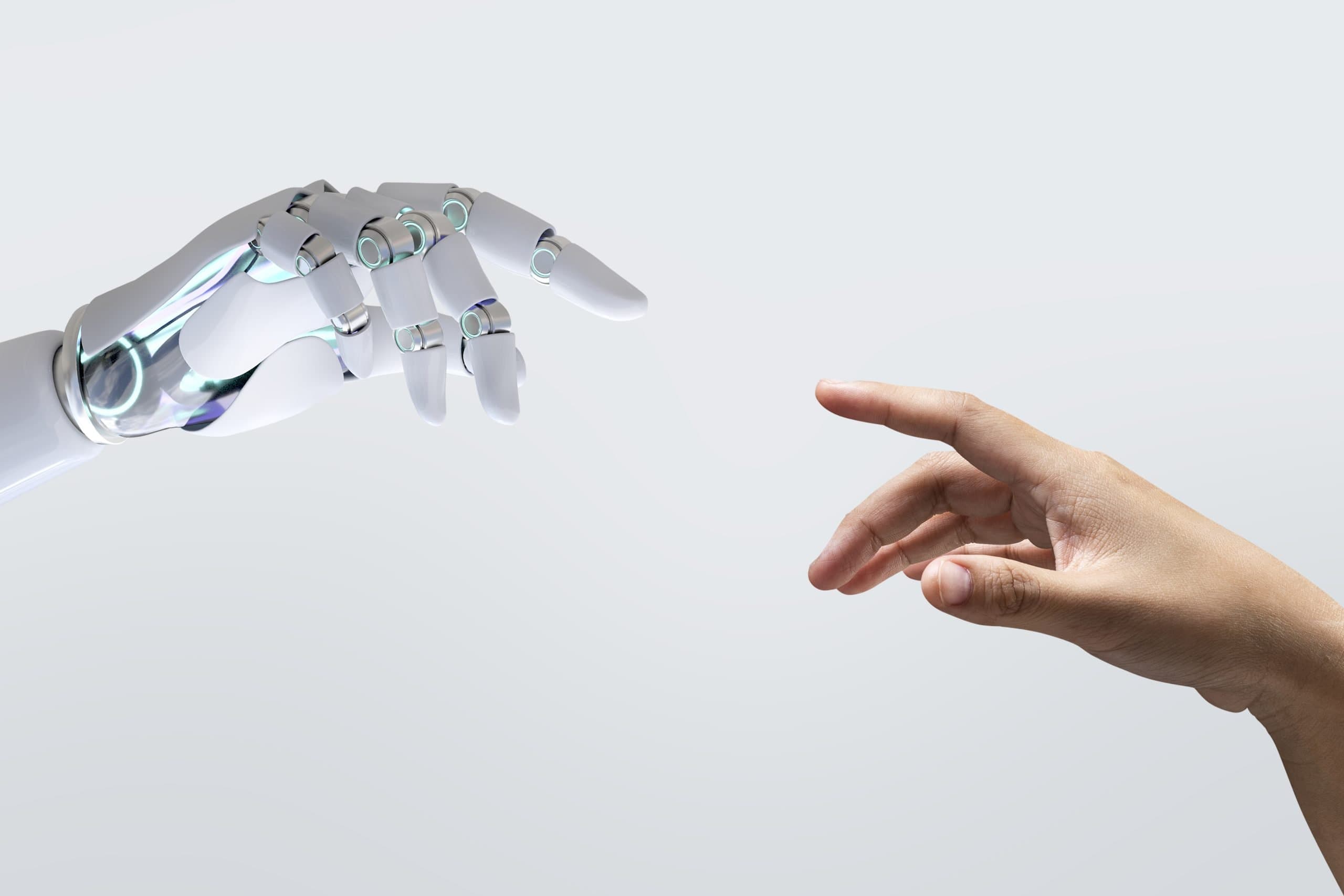
What is Artificial Intelligence
Artificial Intelligence (AI) is a field of computer science aimed at creating systems capable of performing tasks that require human intelligence, such as reasoning, learning, content creation, and problem-solving. By leveraging complex data and algorithms, AI powers applications ranging from virtual assistants to image generation, promising innovations across multiple industries.
One of these industries, Graphic Design, has undergone significant evolution thanks to generative AI tools. Many professionals have chosen to integrate these new technologies into their workflows to improve efficiency and achieve remarkable results.
Focusing on specific AI capabilities applied to images, one notable feature is object recognition, which enables systems to automatically identify elements within an image—ranging from people and animals to objects and buildings—while classifying them into groups and assigning specific, content-based labels.
Another key functionality is automatic description generation, which allows AI to create textual descriptions explaining the content of an image in a way that humans can understand. This technology is used in accessibility applications for the visually impaired, as well as in automating caption creation for multimedia and social media content.
If a system can generate a description from an image, it can also generate an image from a descriptive text. This capability has led to the development of various image-generation platforms. By processing user-provided inputs, such as text prompts and preset parameters, these platforms can produce innovative and striking images by drawing on information from categorized databases.
In this evolving landscape, one name stands out as a pioneer of the new aesthetic frontier: Midjourney. Founded by a team of visionary designers, Midjourney distinguishes itself with an innovative philosophy that merges art and technology into a single visual experience. But what makes it so revolutionary? Beyond being one of the first platforms to offer these capabilities, it excels in advancing the narrative of digital design, transforming traditional aesthetic concepts and creating an entirely new visual language.
Vivid colors, geometric shapes, and fluid animations are the hallmarks of Midjourney’s iconography. Every element is carefully crafted to evoke emotions and stimulate creativity, turning the digital experience into something truly unique and engaging. Midjourney’s impact goes beyond aesthetics: it has deeply influenced the graphic design world, inspiring a new generation of designers to push creative boundaries. From iconic advertising campaigns—like Coca-Cola’s 2023 campaign—to corporate websites, this style is rapidly spreading, transforming the digital visual landscape into a vibrant and dynamic space. It is clear that Midjourney, along with similar AI applications, is reshaping how we perceive design, paving the way for a future where art and technology merge into a singular, unforgettable experience.

Concerns
Concerns regarding the use of AI in design include the potential devaluation of art and artists, as generating animated images with AI becomes increasingly easy. There is also worry that AI could homogenize creative output, as it learns from provided inputs, raising questions about the ownership and copyright of AI-generated creations. The speed at which AI produces images is seen as an advantage, but it also raises fears of promoting laziness or dependency, affecting both designers and clients.
AI: A Valuable Resource?
Artificial Intelligence can be a valuable resource for designers, but it cannot fully replace human creativity. Many industry leaders view AI as a tool to enhance human work rather than replace it. Collaboration between humans and machines can improve agility, reduce costs, personalize projects, and accelerate development timelines. However, current generative AI has limitations and cannot substitute the expertise of professional graphic designers. Designers remain essential for injecting creativity and creating emotional connections in projects. Despite AI’s evolution, human creativity will continue to be a vital asset, as AI can only emulate previous work and lacks true human discernment.

This site is protected by Google reCAPTCHA v3, Privacy Policy and Terms of Service.